Construct The Cumulative Frequency Distribution For The Given Data. Exclusive Media Updates #853
Start Now construct the cumulative frequency distribution for the given data. deluxe internet streaming. Zero subscription charges on our content platform. Get swept away by in a extensive selection of videos presented in best resolution, suited for premium streaming fanatics. With contemporary content, you’ll always be in the know. Locate construct the cumulative frequency distribution for the given data. arranged streaming in gorgeous picture quality for a totally unforgettable journey. Become a patron of our media world today to watch exclusive prime videos with for free, subscription not necessary. Be happy with constant refreshments and investigate a universe of special maker videos engineered for premium media experts. Don't pass up one-of-a-kind films—start your fast download! Indulge in the finest construct the cumulative frequency distribution for the given data. original artist media with vivid imagery and chosen favorites.
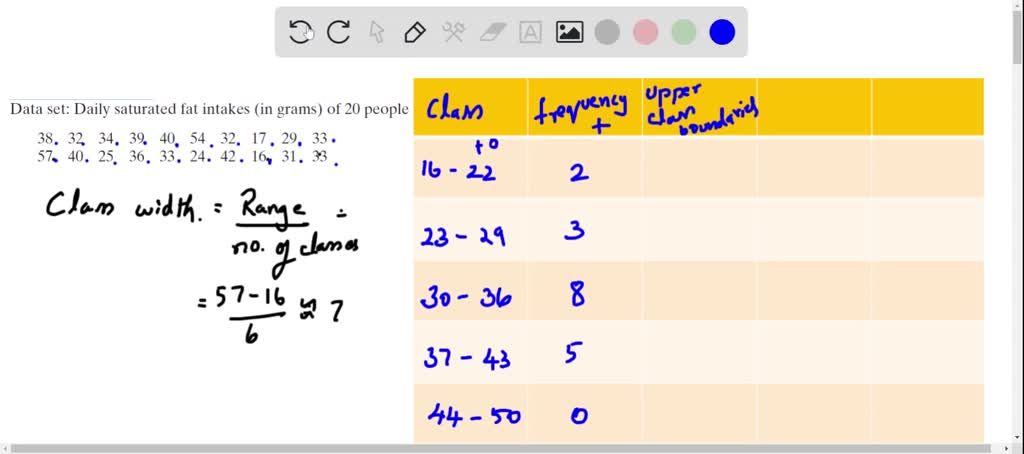
The frequency distribution table below gives the frequency and the cumulative frequency Learn how to construct a cumulative frequency distribution, understand examples, and interpret cumulative frequency distribution tables for better data analysis. Notice how the class intervals for the cumulative frequencies have class limits (an upper limit and lower limit)
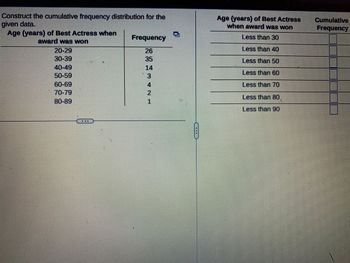
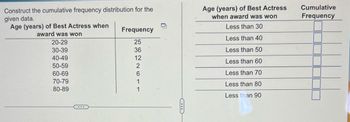
Construct the cumulative frequency distribution for the given data. Age
This is because cumulative frequency is a running total See examples of less than and greater than forms of the table and how to interpret them. Let's create a cumulative frequency graph from this table.
A cumulative frequency distribution is an important tool for data analysis
It's a way to show the sum of all values up to the current class in a frequency distribution. This table provides a clear view of how the frequencies accumulate across the data set Cumulative frequency distributions are particularly useful for understanding the number of data points that fall below a certain value, which can be helpful in various statistical analyses such as determining medians, quartiles, and percentiles.1 additionally, cumulative frequency distributions can be. Cumulative frequency is the total of a frequency and all frequencies in a frequency distribution until a certain defined class interval
Learn more about the interesting concept of cumulative frequency, the types, plotting a graph, and solve a few examples. In statistics, cumulative frequency is defined as the sum of frequencies distributed across various class intervals This involves organizing the data and their totals into a table where the frequencies are allocated according to each class interval. Creating cumulative frequency distributions another important concept related to frequency is cumulative frequency, which keeps a running total of frequencies up to a specific value or class
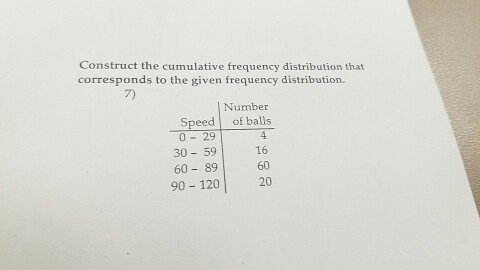
This provides insight into how data accumulates over a specific range of values, and is fundamental in understanding ideas such as median, quartiles, interquartile ranges, computing area under the uniform.
Calculating cumulative frequency gives you the sum (or running total) of all the frequencies up to a certain point in a data set This measure is different from absolute frequency, which refers to the number of times a particular value appears in a data set Cumulative frequency is especially useful when trying to answer a more than or less than question about a population, or for checking. Learn how to construct cumulative frequency distributions for discrete and continuous data using frequency tables and graphs
![[SOLVED] Construct a cumulative frequency distribution using the data](https://dsd5zvtm8ll6.cloudfront.net/si.question.images/image/images9/583-S-J-P-D(625).png)